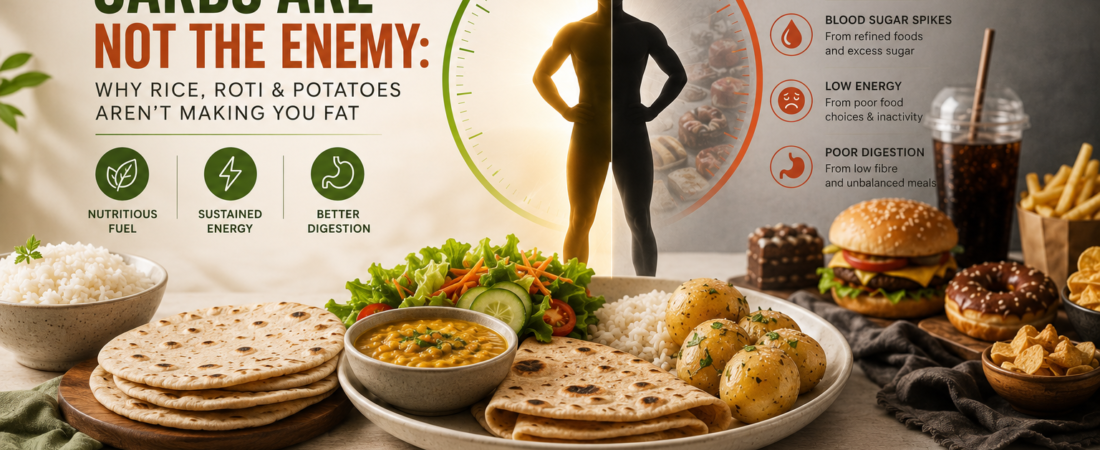
Open any fitness forum or family WhatsApp group, and someone has just announced they’re giving up carbs. In most Indian homes, that translates to one thing: no rice after 8 PM, roti rationed to one per meal, and potato quietly removed from the sabzi.
The logic sounds airtight- carbs turn into sugar, sugar turns into fat, so cutting carbs should melt the fat away. Except that isn’t how your body actually works. Rice, roti, and potato have fed Indian families for generations, long before lifestyle diseases became front-page news. So, what really changed? It wasn’t the carbs. Let’s separate the science from the scare stories.
WHERE DID THE “CARBS ARE BAD” IDEA COME FROM?
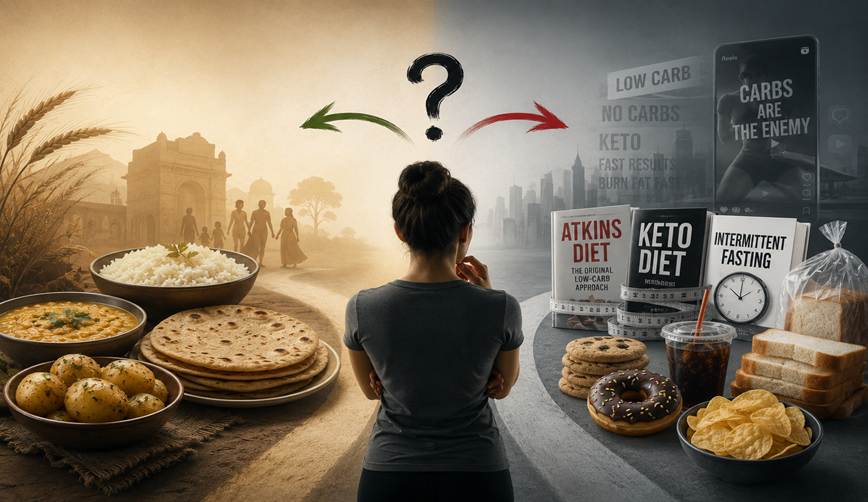
The fear of carbohydrates didn’t start in an Indian kitchen. It arrived through decades of Western diet trends, from Atkins in the 1970s to today’s keto and intermittent-fasting reels. These diets often deliver fast early results, but mostly because cutting out an entire food group naturally means eating fewer total calories- not because carbs are uniquely fattening.
Somewhere in translation, “carbs” became one villain, lumping a bowl of dal-chawal in with a packet of biscuits. Rice and roti are whole, traditional foods; biscuits, white bread, and cold drinks are refined, processed ones. Treating them as the same thing is where this myth took root.
THE REAL MATH BEHIND WEIGHT GAIN
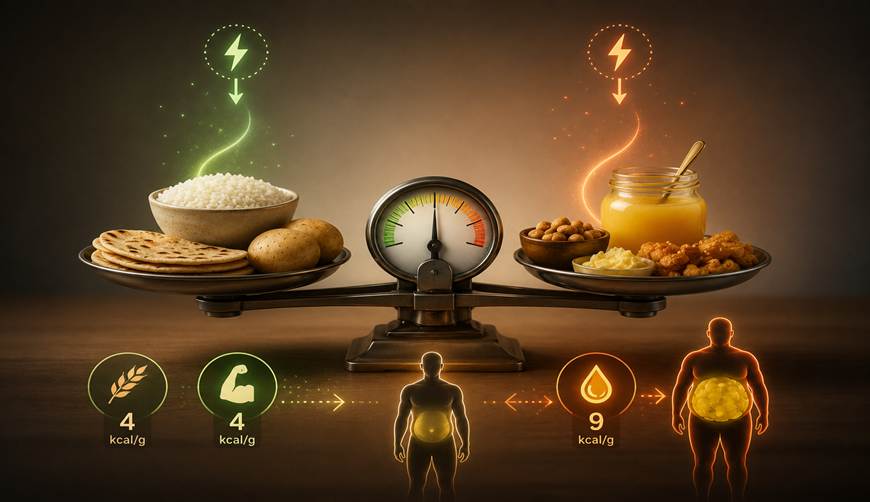
Here’s the simplest fact in nutrition science, and it’s the one diet trends tend to bury: weight gain happens when you consistently take in more energy than your body uses a calorie surplus. Carbohydrates and protein both supply roughly 4 calories per gram; fat supplies about 9. Whichever macronutrient you overeat, the extra energy gets stored as fat. Your body doesn’t keep a separate ledger for rice vs. paneer vs. ghee.
**Reality check
It doesn’t matter whether extra money in a bank account came from your salary or a bonus deposit more than you spend, and the balance grows. Energy works the same way. The real question isn’t “are carbs bad,” it’s “am I eating more than I’m burning”- and that depends on portions and daily habits, not on whether rice is on the plate.
WHAT RICE, ROTI & POTATO ACTUALLY BRING TO YOUR PLATE
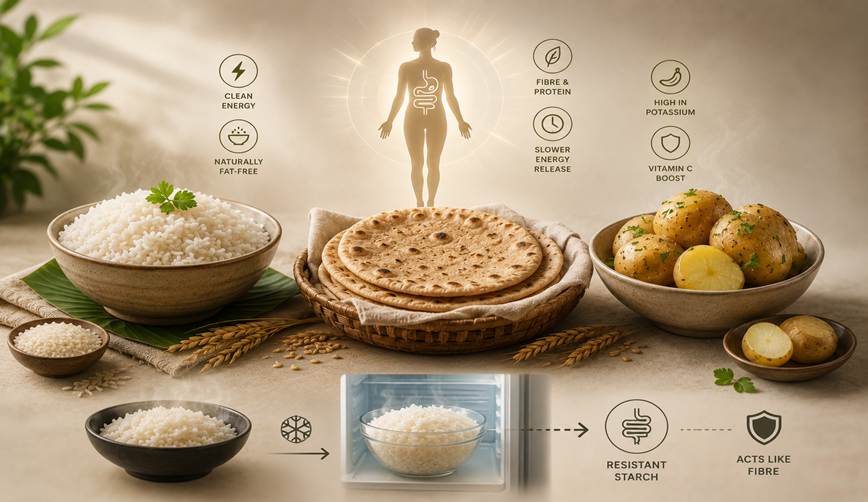
Each of these staples earns its place at the table. Rice is naturally fat-free and provides quick, clean energy; it has fed most of Asia for thousands of years, long before lifestyle diseases became common. Roti, made from whole wheat, provides more fibre and protein than plain white rice, along with a gentler, slower release of energy that keeps you fuller for longer.
Potato is probably the most unfairly judged of the three: it’s naturally fat-free, carries more potassium than a banana, offers a solid dose of vitamin C, and when boiled or baked with the skin on rather than fried, ranks among the most filling foods you can eat. A neat trick worth knowing: when rice or potato is cooked and then cooled before eating, part of the starch converts into “resistant starch,” which behaves more like fibre than sugar in your body. None of that sounds like an enemy food.
SO, WHAT’S ACTUALLY MAKING YOU GAIN WEIGHT?
If rice, roti, and potato aren’t the problem, what is? Usually, it’s everything sitting around them: a paratha swimming in ghee, rice next to a deep-fried curry, potato turned into chips or fries, three cups of sugary chai a day, mithai at every celebration, second helpings out of habit rather than hunger. These add up fast.
So does eating in front of a screen, which makes it easy to lose track of how much you’ve eaten. Add a desk job and a day with little movement, and a calorie surplus builds quietly over weeks. The carb on your plate didn’t cause that- the oil, the sugar, the portions, and the sedentary day around it did.
**Worth reading: The stress connection
There’s a fifth factor that rarely gets blamed for the extra kilos: STRESS. When cortisol stays elevated for weeks, it nudges fat storage toward the belly and pulls cravings straight toward fried snacks, sweets, and second helpings eaten on autopilot. A stressful month at work often comes with a few extra kilos for exactly this reason; we’ve gone deeper into it in Easy Ways to Reduce Stress Instantly, Why Stress Happens: The Science Behind Your Body’s Response, and Hidden Stress Causes You’re Overlooking.
SMART SWAPS BEAT SCARY BANS
You don’t need to banish rice, roti, or potato; you need a plate that works in your favour. Start with the half-plate method: fill half your plate with vegetables and salad, a quarter with protein like dal, paneer, eggs, or chicken, and the last quarter with your rice, roti, or potato.
The half-plate method
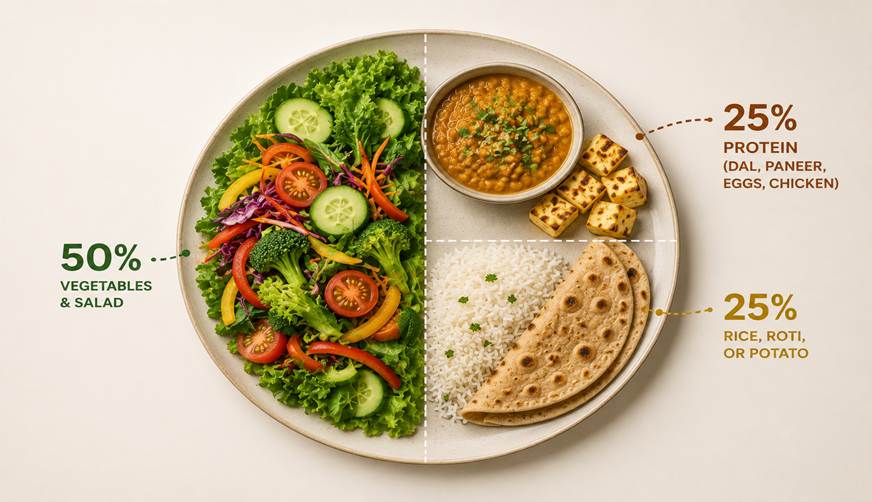
50% vegetables & salad
25% protein (dal, paneer, eggs, chicken)
25% rice, roti, or potato
Pair your carb with protein and fibre: dal-chawal, curd-rice, or sabzi with roti — so digestion slows down, and blood sugar rises gently instead of spiking. Go easy on the oil and ghee rather than the grain itself; that’s usually where the extra calories are hiding. Try cooling cooked rice or potato before reheating to get the resistant-starch benefit. And eat without skipping meals; skipping breakfast or lunch to “save calories” almost always backfires into overeating later in the day.
MOVE MORE, WORRY LESS
Movement changes how your body handles carbohydrates. Muscle tissue is where a large share of the carbs you eat gets stored as usable energy rather than fat, and regular strength training improves your body’s sensitivity to insulin — meaning your system manages carbs more efficiently. This is exactly why two people can eat the same plate of rice and see very different results: one trains regularly, the other doesn’t.
You don’t need a gym membership to start, and you don’t need to start hard. If you’re completely new to this, a simple bodyweight routine at home needs zero equipment. Once you’re moving regularly, it’s worth understanding why strength training reshapes your body in ways cardio alone doesn’t. From there, picking up a pair of dumbbells is the natural next step; choosing the right starting weight saves you the two most common beginner mistakes, and five simple dumbbell moves done consistently will take you further than an hour of random exercises. When that start feeling easy, pairing your dumbbells with an adjustable bench roughly doubles what the same small setup can do.
Building strength at home doesn’t need a fancy setup — just the right basics, used consistently.
Explore home gym essentials on Leeway →
THE BOTTOM LINE
Rice, roti, and potato are not the enemy, they’re the foundation of Indian meals for good reason. What matters is how much you eat, what you cook them in, what you pair them with, and how much you move afterward. Fix those four things, and you can keep your dal-chawal, your roti-sabzi, and your aloo without any guilt.
The next time someone tells you to fear carbs, remember: it’s not the rice on your plate that’s the problem. It’s everything you stopped checking around it.
**(This article is for general nutrition awareness and is not a substitute for personalised advice from a registered dietitian or doctor, especially if you’re managing diabetes, PCOS, or another medical condition.)
Signing off:
Dr. Ashu
(Counsellor)