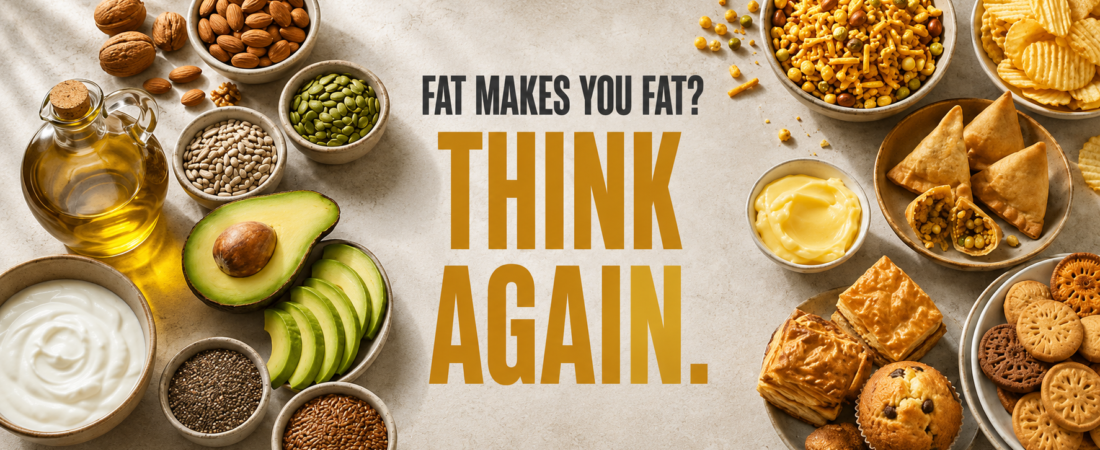
For many years, fat was the enemy in all discussions about dieting: low-fat yoghurt, low-fat cookies, low-fat products in general. Whenever something had ‘fat’ on the label, we would steer clear of it, believing that eating fat must lead to a larger waistline.
Except… it isn’t. Not even close.
The truth is far more interesting and honestly, much kinder to your body. Fat isn’t the enemy. Some fats are essential for your brain, your hormones, your heart, and yes, even for keeping your weight in check. The real story isn’t “fat makes you fat.” It’s “the wrong fats, in the wrong amounts, mess things up.” Let’s unpack that.
WHERE DID THE “FAT IS BAD” MYTH EVEN COME FROM?
Back in the 1950s and 60s, a researcher named Ancel Keys popularised the idea that dietary fat- specifically saturated fat was the main driver of heart disease. His famous “Seven Countries Study” linked fat intake to cardiovascular problems, and from there, low-fat diets became gospel.
Food companies jumped on the bandwagon. Grocery shelves filled up with “fat-free” products. But here’s the catch: when you take fat out of food, you have to put something back in to make it taste good. That something was usually sugar and refined carbohydrates.
So, while we were busy avoiding fat, we were quietly eating our way into a sugar-fuelled obesity and diabetes epidemic. Ironic, right?
FAT DOESN’T MAKE YOU FAT, EXCESS CALORIES DO
Here’s a basic truth that often gets lost in diet culture: weight gain happens when you consistently eat more calories than your body burns, regardless of whether those calories come from fat, carbs, or protein.
Fat does have more calories per gram (9 calories) compared to carbs and protein (4 calories each). But that doesn’t make it inherently fattening; it just means portion awareness matters. In fact, healthy fats can help you eat less overall because they keep you fuller for longer, stabilise blood sugar, and reduce those annoying 3 p.m. snack cravings.
Nutrition is only half the equation, though pairing smart fat choices with regular strength training does far more for your body composition than diet alone. If you’re setting up a home workout space, a solid pair of dumbbells or a set of weight plates is one of the simplest ways to start. For a deeper look at how everyday stress quietly affects your metabolism and eating habits, this piece on hidden stress causes you’re overlooking is worth a read.
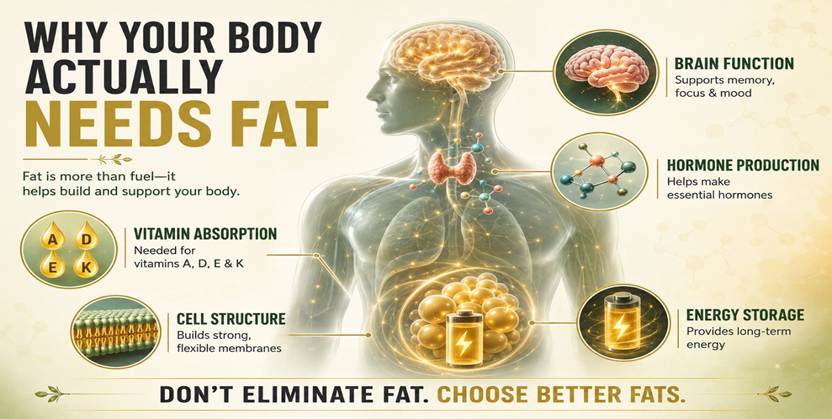
WHY YOUR BODY ACTUALLY NEEDS FAT
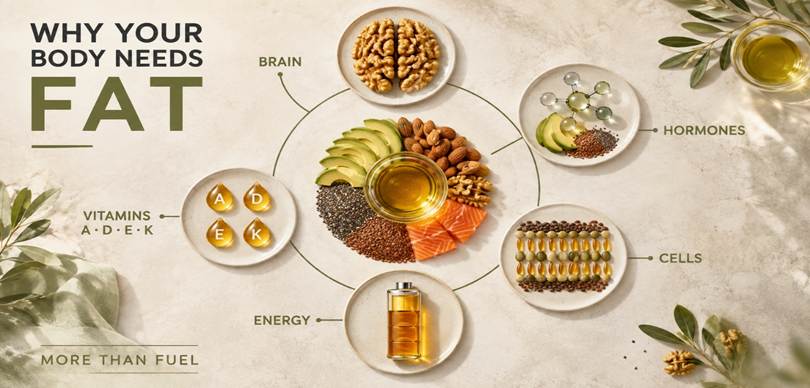
Fat isn’t just fuel; it’s practically a building block of who you are. Here’s what it does behind the scenes:
- Brain function: Nearly 60% of your brain is made of fat. Omega-3 fatty acids especially support memory, focus, and mood.
- Hormone production: Fat is essential for producing hormones like oestrogen, testosterone, and cortisol. Cut fat too aggressively, and your hormones can go haywire.
- Vitamin absorption: Vitamins A, D, E, and K are fat-soluble, meaning your body needs dietary fat to absorb them properly.
- Cell structure: Every single cell membrane in your body relies on fat to stay strong and flexible.
- Energy storage: Fat is your body’s long-term energy reserve, especially useful during periods of low food intake.
Skipping fat entirely isn’t heart-healthy or waistline-friendly; it’s just counterproductive.
THE GOOD, THE BAD, AND THE TRULY UGLY: TYPES OF FAT
Not all fats are created equal, and this is where most of the confusion lives.
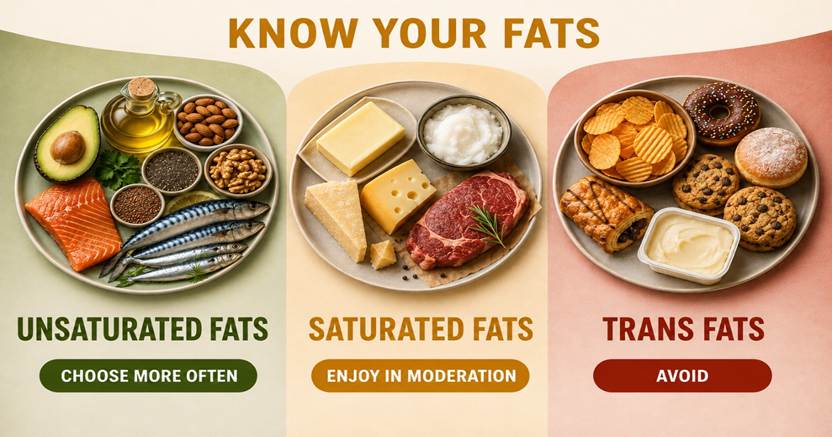
1. Unsaturated Fats: The Good Guys
These are your heart-friendly fats, found in:
- Olive oil, avocado, and avocado oil
- Nuts and seeds (almonds, walnuts, chia, flax)
- Fatty fish (salmon, mackerel, sardines)
They help lower bad cholesterol (LDL), reduce inflammation, and support cardiovascular health. Omega-3 and omega-6 fatty acids fall into this category and are considered “essential” because your body can’t make them on its own; you have to get them from food.
2. Saturated Fats: Not the Villain, But Not a Free Pass Either
Found in butter, cheese, red meat, and coconut oil, saturated fat has been at the centre of nutrition debates for years. Current research suggests moderate amounts aren’t as harmful as once believed, but overdoing it, especially alongside a diet high in refined carbs, can still raise LDL cholesterol levels. Moderation is the name of the game here.
3. Trans Fats: The Actual Bad Guy
This is the one fat you genuinely want to avoid. Found in many fried foods, packaged baked goods, and anything with “partially hydrogenated oil” on the label, trans fats raise bad cholesterol and lower good cholesterol (HDL). Many countries have banned or heavily restricted them for good reason.
SO, WHAT SHOULD YOUR PLATE ACTUALLY LOOK LIKE?
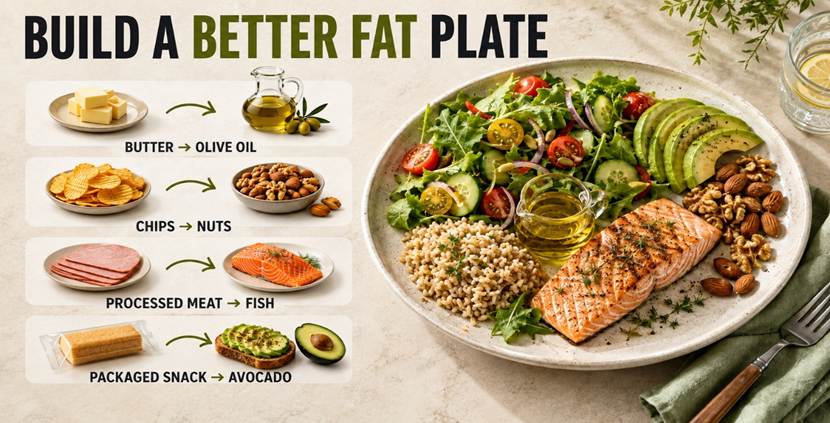
Instead of fearing fat, aim to make smarter swaps:
- Swap butter for olive oil when cooking or dressing salads
- Snack on a handful of walnuts or almonds instead of chips
- Add avocado to sandwiches, salads, or smoothies
- Choose fatty fish like salmon twice a week instead of processed meats
- Read labels and avoid anything listing “partially hydrogenated” oils
A simple rule of thumb: if it grew from the ground or swam in water, it’s probably a good source of fat. If it came from a factory with a long ingredient list, think twice.
And if you’re building strength at home alongside these dietary changes, a sturdy workout bench rounds out a basic home gym setup nicely; it pairs well with the dumbbells and plates mentioned earlier. Stress management matters here too; if cortisol and stress are part of your picture, the science behind why stress happens breaks down the connection well.
How much fat do you really need?
The majority of nutrition advice recommends that fat should account for about 20–35% of your total daily calorie intake, with saturated fat remaining below 10%. That is a quite wide range, giving you ample scope to eat olive oil, nuts, seeds and fish without feeling guilty.
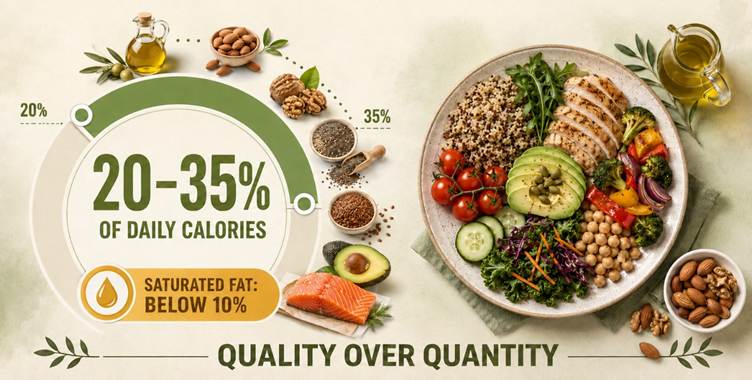
What you should do isn’t to eliminate fat; rather, you should opt for quality over quantity and balance this with a diet that is rich in vegetables, whole grains, and lean protein.
The Bottom Line
The idea that being fat makes you fat is one of those beliefs which may seem logical at first glance but breaks down as soon as you look at the scientific evidence. The body doesn’t just cope with fat; it needs it to think clearly, balance its hormones, absorb nutrients, and keep your heart in good condition.
The actual causes of weight gain and bad health are most often excess calories, added sugars, refined carbohydrates, and trans fats, not the avocado that is on your toast or the olive oil in your salad.
So go ahead, enjoy that drizzle of olive oil, that handful of almonds, that piece of salmon. Your body will thank you.
Disclaimer: This article is for informational purposes only and isn’t a substitute for professional medical or nutritional advice. Consult a registered dietitian or healthcare provider before making significant changes to your diet.
Signing off:
Dr. Ashu
(Counsellor)